Why is it necessary to perform regular cleaning on crude oil storage tanks?
Crude oil storage tanks, as core facilities in the petroleum industry's storage and transportation chain, directly impact the smooth operation of the entire industrial chain. However, as crude oil storage duration increases, regular tank cleaning has become an essential requirement to ensure production safety, enhance economic efficiency, and fulfill environmental responsibilities.
First, periodic cleaning is fundamental to maintaining product quality and equipment safety. Crude oil inevitably contains impurities such as sand, water, gums, wax, and minerals. During prolonged static storage, these heavy components gradually settle under gravity, forming thick layers of sludge and deposits on the tank bottom and walls. This not only reduces the tank’s effective capacity—losses reaching 15% to 20% when deposit thickness exceeds 50 centimeters—but also significantly compromises the purity of subsequent oil batches. More seriously, accumulated water and impurities at the tank bottom can form acidic water layers, accelerating corrosion of the tank floor and inner walls. Industry data shows that corrosion rates beneath deposits can be 3 to 5 times higher than normal areas, increasing the risk of wall thinning and even perforation leaks. Additionally, if different batches or types of crude oil are mixed without thorough cleaning, residual additives or contaminants may trigger chemical reactions, leading to oil degradation.
Second, regular cleaning is a critical measure for eliminating major safety hazards and preventing accidents. Crude oil storage tanks are classified as high-risk zones with Class I fire protection and Class A explosion prevention requirements. Long-term accumulation of sludge and impurities at the tank bottom releases large amounts of flammable gases during evaporation. If not promptly removed, these gases can form explosive mixtures inside the tank. Moreover, metal oxides and other impurities within the deposits generate and accumulate static electricity during flow or friction. Once exposed to a spark or external ignition source, this could lead to severe fires or explosions. Regular cleaning effectively eliminates these risks, ensuring reliable safety during subsequent maintenance, hot work operations, and ongoing operations.
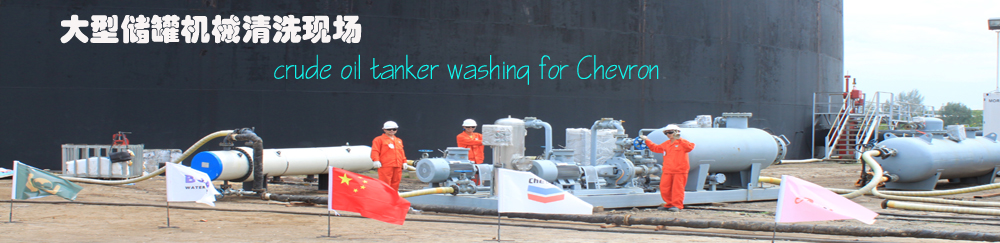
Finally, periodic cleaning is essential for achieving efficient resource recovery and green, low-carbon development. Traditional tank cleaning methods often rely on manual entry into tanks, which involves high labor intensity, long construction cycles, significant risks of poisoning and suffocation, substantial crude oil waste, and serious environmental pollution. Aotulong Technology’s mechanical cleaning systems—such as the BJATL-COW crude oil washing system or COTWS crude oil tank cleaning system—use closed-loop circulation combined with physical processes like sludge impact, dissolution, and agitation to transform non-flowing sludge into fluid crude oil instead of leaving behind oily sediments. High-pressure jetting and oil-water separation technologies maximize oil recovery from deposits, achieving an oil recovery rate exceeding 98%. This dramatically reduces the volume of hazardous waste sludge generated. Not only does it save enterprises considerable economic losses, but it also fundamentally prevents atmospheric pollution caused by oil and gas emissions, achieving a harmonious integration of economic, safety, and environmental benefits.
In summary, regular cleaning of crude oil storage tanks is far more than routine equipment maintenance—it is a systematic project integrating corrosion prevention, quality assurance, hazard elimination, safety protection, emission reduction, and environmental sustainability. It is an essential step for petroleum storage and transportation companies striving toward high-quality, sustainable development.