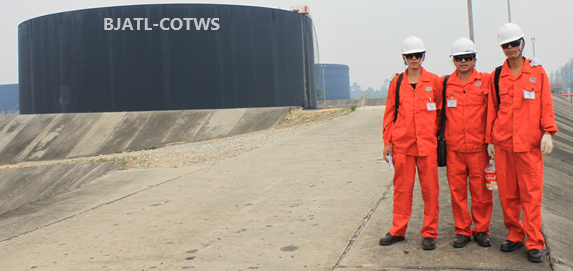
What are the safety measures for the BJATL storage tank cleaning service project?
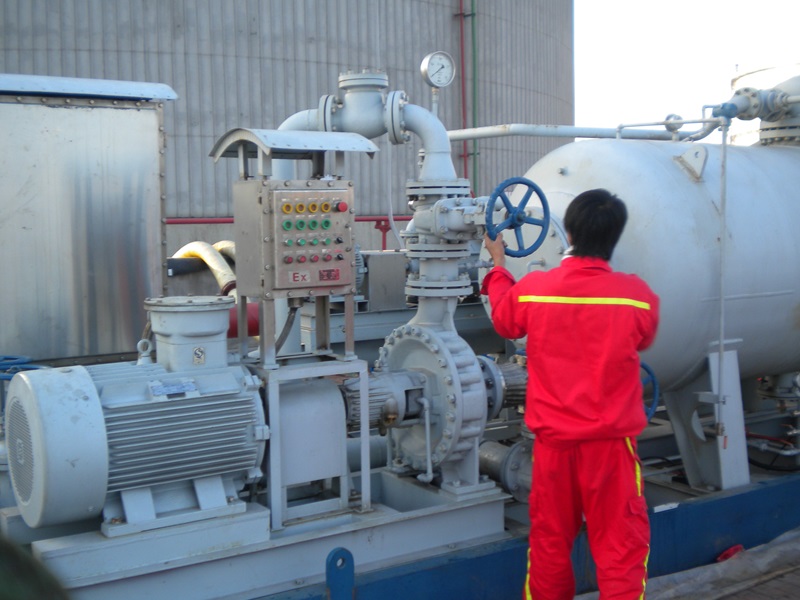
The cleaning operation of crude oil storage tanks is a high-risk system project involving many dangerous factors such as oxygen deficiency asphyxiation, heavy metal poisoning, and fire and explosion.
To completely prevent safety accidents, modern tank cleaning has established a strict safety guarantee system in the preparation and control of operations, as well as during the operation itself.
Firstly, in the preparation and on-site control stages, safety briefings and physical isolation must be strictly implemented. Before the operation, a technical and safety briefing meeting must be held to comprehensively identify risks and formulate feasible safety measures. All oil intake and discharge lines, return pipes, and related valves of the storage tanks must be equipped with blind plates or disconnected to achieve complete physical isolation. At the same time, safety boundary signs must be set up at the operation site, a safe distance must be demarcated, and sufficient fire-fighting equipment must be configured in the upwind direction. Moreover, the cleaning operation must not be carried out on rainy days or when the wind force is above level five. This is to avoid risks brought by the external environment from the source.
Secondly, during the cleaning operation, the core lies in the real-time monitoring of the tank environment and the elimination of hazardous sources. Since the volatilization of crude oil can easily form explosive mixtures, inert gases (such as nitrogen) are usually introduced into the cleaning system for protection, and the concentration of oxygen and combustible gases in the tank is strictly controlled. Throughout the operation, combustible gas, oxygen, and toxic gas detectors must be equipped for continuous monitoring. When the concentration of oil and gas in the tank exceeds 20% of the lower explosive limit, compressed air and high-pressure water jet splash injection must not be used; if the concentration exceeds 40%, cleaning in the tank is absolutely prohibited. At the same time, all metal pipelines, nozzles, and rubber hoses introduced into the tank must be reliably electrically connected and grounded, and metal bonding between flanges must be carried out to completely eliminate the risk of static electricity sparks.
Thirdly, for the extremely high-risk section of personnel entering the tank, strict entry and protection standards have been implemented. Entry into the tank must be accompanied by an entry operation ticket, and a dedicated supervisor must be set up outside the manhole. It is strictly prohibited for one person to supervise two operation points simultaneously. The selection of personal protective equipment is directly limited by the gas concentration: when the concentration of oil and gas is between 4% and 40% of the lower explosive limit, a filtering gas mask must be worn; when the concentration is between 1% and 4%, short-term entry into the tank is allowed but a gas mask must be worn; only when the concentration is below 1% of the lower explosive limit can there be no protective measures for the operation.
Furthermore, workers must not wear synthetic fiber clothing and must use explosion-proof tools such as copper or aluminum to prevent sparks from metal collisions. Finally, in the sections of hot work maintenance and waste disposal, there are also strict safety red lines. Before the tank hot work, multiple explosion detectors must be used to detect the low-lying and corner areas to ensure that the concentration of oil and gas is below 10% of the lower explosive limit before the operation can be carried out, and hot work must not be carried out concurrently with the coating operation inside the tank.
For the oil sludge and rust residue and other impurities removed, they must be wetted with water before collection and transported to a specialized treatment plant. It is strictly prohibited to stack them on site to prevent the spontaneous combustion of combustible materials. In conclusion, the safety guarantee for tank cleaning is achieved through a series of standardized and regulated technical means and management measures such as physical isolation, inert gas protection, real-time gas monitoring, strict static elimination, and graded personnel protection.